
Full Open-Face Machining — Not Repeated Setups
The Gold Grip Vise System is a modular workholding solution designed to eliminate repeated setups, increase spindle utilization, and enable full access to every face of the part.
Built for high-mix production environments where flexibility, access, and efficiency drive
Not a vise upgrade. A modular workholding system
Gold Grip is implemented as a system, not installed as a single tool.
It changes how setups are planned, how clamping is configured, and how parts are machined across multiple faces.
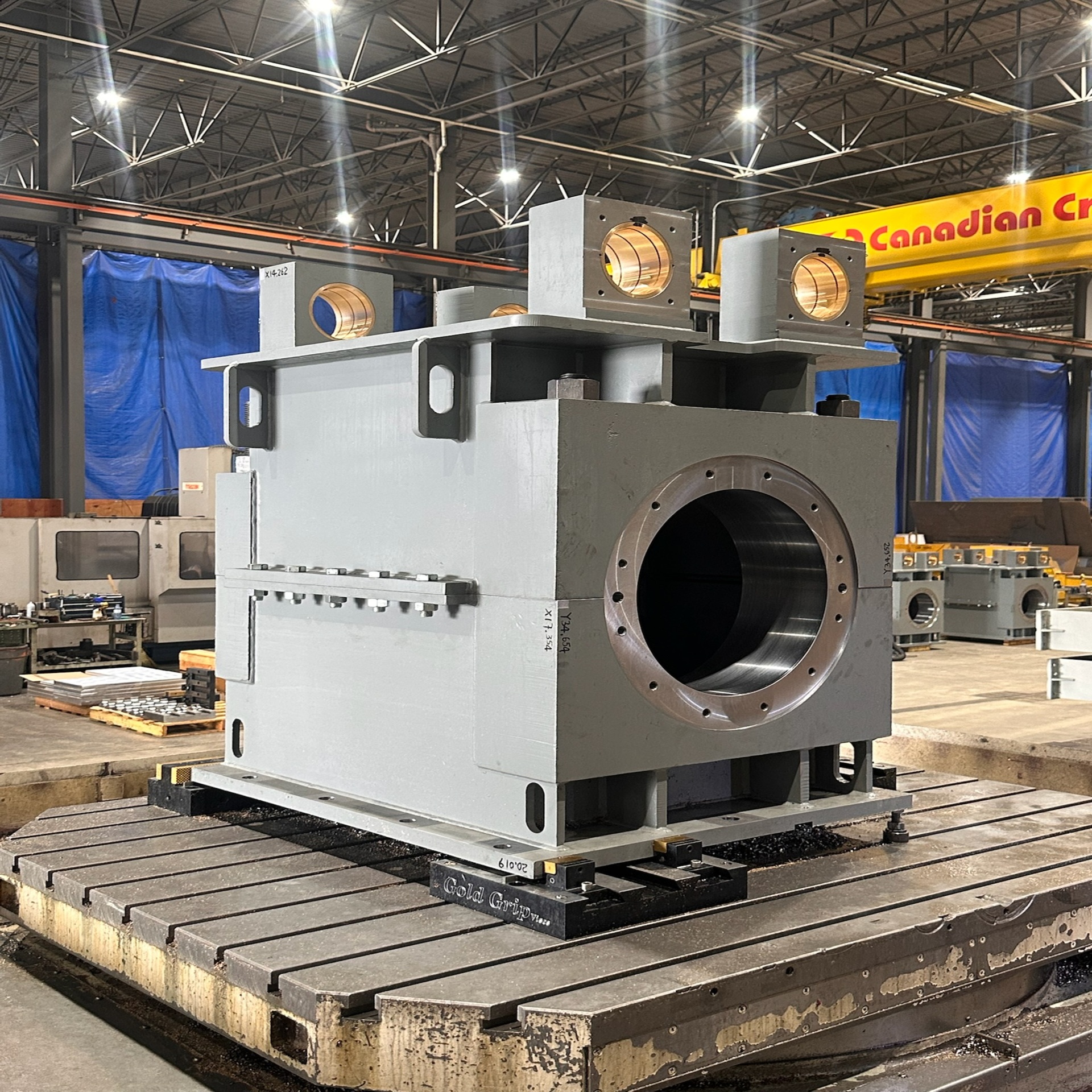
Not a vise upgrade. A modular workholding system
Gold Grip is implemented as a system, not installed as a single tool.
It changes how setups are planned, how clamping is configured, and how parts are machined across multiple faces.
Operational impact at the machine level

Replace multiple setups with open-face machining
By positioning parts once at the table level, shops reduce setup frequency, recover lost spindle time, and improve overall workflow stability.
Extend uninterrupted cutting cycles
Open-face access enables longer continuous machining runs, reducing stoppages between operations and increasing productive cutting time.
Increase throughput without adding machines
By minimizing re-fixturing events and reducing setup interruptions, Gold Grip increases part throughput using the machines you already own.
Reduce setup time. Increase spindle utilization
Shops using Gold Grip routinely eliminate hours of setup time by removing welded tabs, pre-machining, and repeated refixturing.
More cutting time means higher throughput, better machine utilization, and stronger margins.
4–6 Hours
Typical setup time eliminated per job.
$500–$750
Estimated savings per part.
More spindle time
More cutting time, less idle time
Higher throughput
Produce more without additional machines
Keep machines cutting longer
Gold Grip enables continuous machining by reducing setup interruptions and allowing full access to multiple faces in a single setup.
By minimizing re-fixturing, shops recover lost spindle time and improve overall machine utilization.
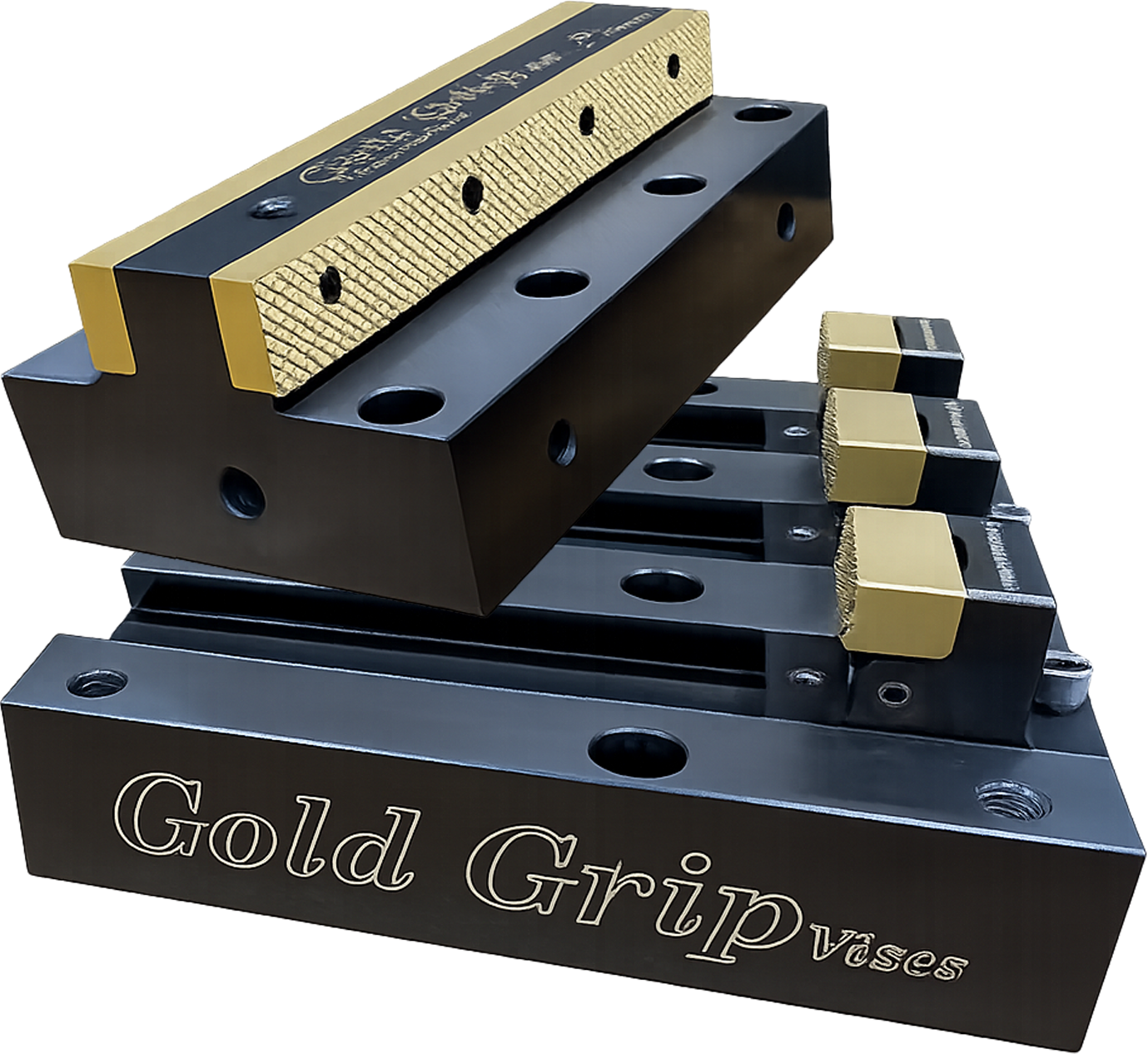
Keep machines cutting longer

Designed for continuous machining strategies that reduce setup interruptions and protect productive spindle time.
Transforms available machine capacity into productive cutting time — improving output without increasing machine count.
System-level capabilities
Scales across the machine envelope to support complex, high-mix production
Delivers up to 8,000 lbs of clamping force per module — without sacrificing access.
Rapid setup and reconfiguration
Supports multi-face and open-face machining
Compatible with a wide range of part sizes and geometries
Enables full workpiece access and better machine envelope use
From setup-driven machining to output-driven machining
Gold Grip removes workholding as a limitation in machine utilization.
Instead of planning around clamps and repeated setups, shops operate with a system designed for longer cutting cycles, predictable workflows, and consistent output.
The result is a machining strategy built around production — not constraint.
CONTINUOUS MACHINING
Parts are positioned once and machined across multiple faces without interruption — reducing setup dependency and increasing cutting time per shift.
Consistent Clamping Performance
Controlled clamping is applied where it matters most — maintaining part stability, reducing vibration, and ensuring repeatable results across complex jobs..
Output Efficiency
By reducing setup interruptions and eliminating unnecessary repositioning, shops increase spindle engagement and overall machine output — without adding equipment.
Engineered for high-load production environments.
Gold Grip Vises torque and clamping force specifications are calibrated and verified under controlled conditions. This reference documentation provides validated torque-to-force data to support safe, consistent, and repeatable clamping.
Intended for engineering reference, process planning, and quality assurance.
Adopt table-scale workholding.
Increase output without increasing overhead.
FAQs
What is Gold Grip, exactly?
Gold Grip is a table-scale clamping system designed to unlock the full machining envelope of a CNC table. Unlike traditional vises that localize clamping, Gold Grip distributes clamping across the table to enable multi-face access, larger parts, and fewer re-fixtures.
How is Gold Grip different from a traditional vise?
Traditional clamps typically apply horizontal force and do not actively pull the workpiece down, which can cause parts to lift or shift during clamping and machining. Gold Grip applies clamping in both a horizontal and downward force vector, drawing the workpiece into the table and reducing part deflection.
What types of machines is Gold Grip compatible with?
Gold Grip is compatible with most 3-axis, 4-axis, and 5-axis CNC milling machines. It integrates cleanly into both traditional workflows and shops already using zero-point or palletized systems.
What size or type of parts can Gold Grip hold?
Gold Grip is designed for both small and large parts. It excels in high-mix, low-volume environments where part geometry varies and re-fixturing time is a bottleneck.
Does Gold Grip replace my existing workholding?
In many shops, Gold Grip replaces 80–90% of conventional vises and fixtures. For shops using zero-point systems, Gold Grip typically becomes an early-stage or primary workholding solution within the workflow.
How rigid is the system under heavy cutting loads?
Gold Grip is engineered for high rigidity and repeatability. Shops routinely run aggressive cuts without part movement, even during deep or interrupted machining operations.
How long does setup take compared to traditional vises?
Setup time is often reduced dramatically. Once installed, operators can fixture parts faster, reduce indicating time, and complete more operations per setup.
Is Gold Grip suitable for production work or only prototyping?
Both. While Gold Grip is ideal for prototyping and high-mix work, many shops also use it for short-run and repeat production where flexibility and throughput matter more than dedicated fixtures.